Discover our ultra-precision OEM & ODM components designed for critical applications across aviation, medicine, and high-frequency consumer technology.
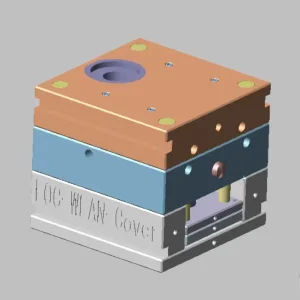
In modern manufacturing, industrial enterprises face a growing challenge: bridging the gap between digital rapid prototyping and high-volume production. Historically, this gap presented a major financial barrier. Traditional injection molding requires significant capital for hard steel tooling, which is difficult to justify for specialized, validation-phase, or niche-market products.
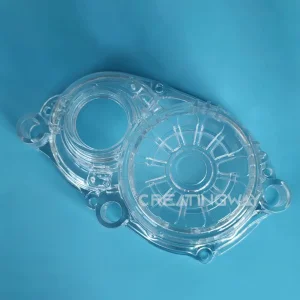
OEM Low-Volume Injection Molding (LVIM) has emerged as the standard solution to resolve this challenge. By combining advanced CAD/CAM software, high-speed CNC machining, and flexible alloy tooling, LVIM offers an efficient path to bridge the gap. It allows companies to manufacture between 100 and 10,000 production-grade plastic components with short lead times and low upfront costs. This approach provides a practical solution for custom hardware projects.
For original equipment manufacturers (OEMs) in sectors such as medical devices, aerospace, and high-end consumer electronics, low-volume molding is more than just a cost-saving method. It serves as a strategic tool for rapid iterations, market validation, and agile supply chain management. By using production-grade materials early in the cycle, engineering teams can conduct reliable physical, thermal, and regulatory tests, reducing risks before scaling up production.
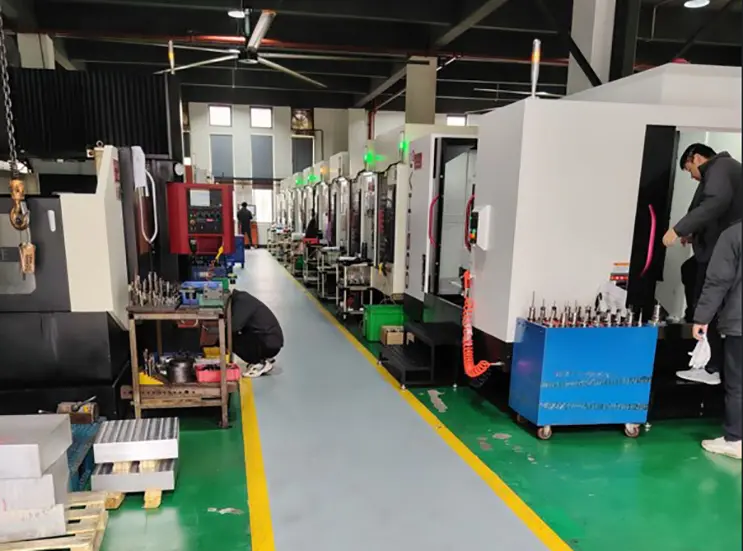
We integrate traditional machining with modern additive and subtractive systems to provide high-quality rapid tooling and customized low-volume production.
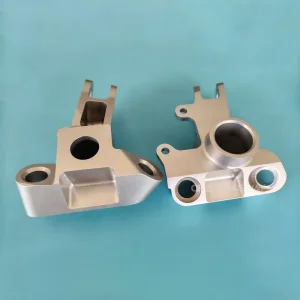
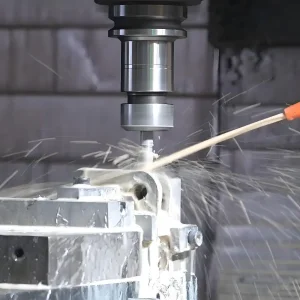
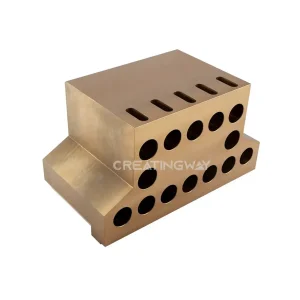
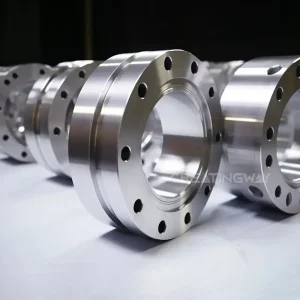
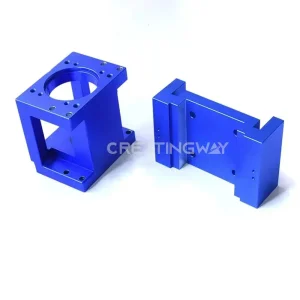
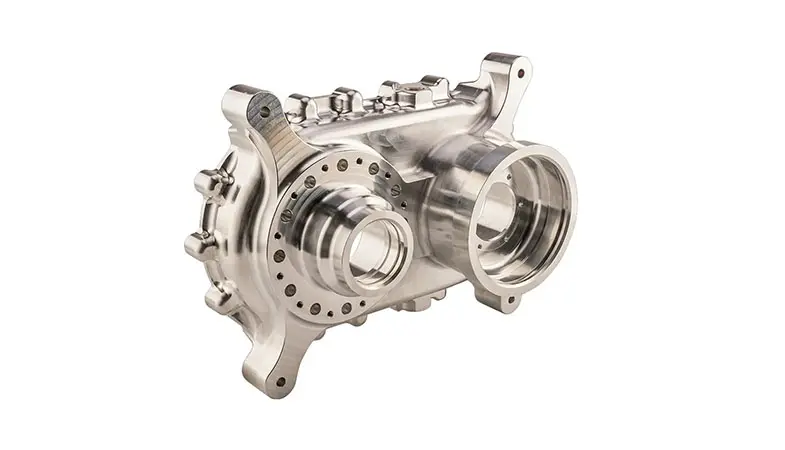
For high-precision parts with tight tolerances and specialized material requirements, our CNC machining division offers reliable performance. We produce functional prototypes in as fast as 1-3 days, with optional surface treatments (such as powder coating and anodizing) ready in 4-5 days.
Our production capabilities ensure cost-effective machined parts even at volume scales. Using modern engineering controls and stable structural setups, we routinely achieve and maintain tight tolerances down to +/-0.02mm across complex configurations.
Geopolitical shifts and logistics challenges have highlighted the risks of over-centralized manufacturing. OEMs are increasingly moving toward regionalized and decentralized supply chain models to ensure continuity.
Using high-volume tooling early in a product's lifecycle locks up capital in unvalidated designs. Low-volume injection molding helps optimize cash flow by matching tooling investment with initial market demand.
Shorter product lifecycles require faster development phases. Modern rapid tooling allows manufacturers to transition from final design approvals to market delivery in weeks rather than months.
Our engineering and manufacturing solutions are developed to meet the strict regulatory, thermal, and mechanical requirements of modern high-tech industries.
We manufacture biocompatible components, high-precision surgical instrument housings, and diagnostic device enclosures. By using FDA-compliant thermoplastics within controlled environments, we ensure the structural integrity, sterilization resistance, and tight tolerances required for clinical use.
Aviation and defense environments demand materials with high strength-to-weight ratios, low outgassing properties, and excellent flame retardancy. Our engineering team processes advanced engineering polymers (such as PEEK, PEI, and glass-filled nylons) to meet these demanding operational standards.
For high-end consumer technology, surface finish and cosmetic consistency are critical. Our low-volume injection molding services support complex overmolding, structural internal frames, and exterior enclosures with custom colors, textures, and electromagnetic shielding.
We utilize a systematic engineering pipeline to maintain component accuracy, optimize tool geometry, and manage production variables.
Upload your multi-format 3D CAD files (STEP, IGES, Parasolid) directly to our system. Our engineers analyze the geometric design, material choices, and target application requirements.
Within 24 hours, you receive a detailed, data-driven Design for Manufacturability (DFM) assessment. We analyze draft angles, wall thickness variations, gate locations, and tool path accessibility.
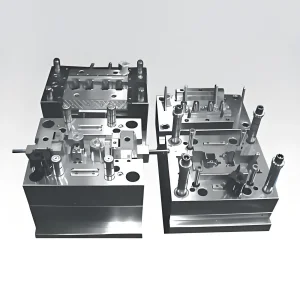
Upon design sign-off, we manufacture the tooling. Our precision rapid tooling options feature modular mold bases and specialized core inserts, allowing us to complete standard molds efficiently.
Once production is complete, parts undergo dimensional and visual quality checks. We package and ship finished parts globally, offering fast delivery times.
Creatingtec's industrial facility is built on practical manufacturing experience and a track record of reliable global logistics.
"Creatingtec Manufacturing Limited was founded by experienced engineers with a strong background in precision machining and mold tool manufacturing. Starting with an initial investment in two CNC machines, we have expanded our capacity to offer CNC machining, low-volume injection molding, and custom sheet metal fabrication within our modern 2000m² facility."
We maintain strict quality control standards throughout the manufacturing process, certified to ISO 9001:2015. Every step, from incoming raw polymer inspection to final coordinate measuring machine (CMM) dimensional checks, is documented to ensure complete traceability.
Our facility features temperature-regulated quality control rooms, automated visual inspection systems, and advanced mechanical testing equipment. This infrastructure ensures we reliably meet our customers' dimensional, cosmetic, and functional requirements.
We supply RoHS and REACH-compliant materials, along with complete trace certificates, physical material reports, and comprehensive dimensional layout data.
We are integrating neural network algorithms into our CAD analytics suite. This software automatically detects micro-level wall thickness variations, predicts potential knit lines, and optimizes gate layouts to minimize cycle times.
Our newer tooling solutions incorporate integrated temperature and pressure sensors. This real-time, closed-loop feedback system allows operators to monitor cavity dynamics during injection, helping to prevent short shots and minimize flash.
As environmental regulations become stricter, we continue to test and integrate biopolymer matrices, recycled resins, and glass-filled biodegradable compounds to help our clients meet their sustainability goals.
Get answers to common engineering questions regarding costs, tool configurations, and production run options.
Explore more of our precision components, manufactured to rigorous engineering standards for demanding industrial applications.
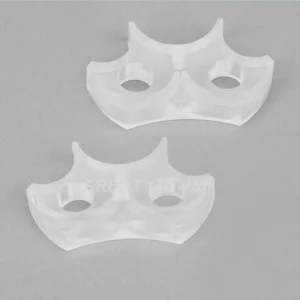
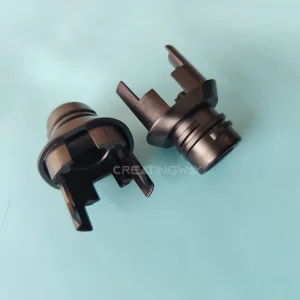
Stay informed with the latest engineering insights, DFM guidelines, updates on polymer technologies, and advancements in rapid tooling.
 Creatingtec