High-Precision Dual-Parting Line Tooling Solutions, Automatic Gate Stripping Systems, and Advanced DFM Prototyping for Mission-Critical Global Hardware Infrastructure.
Explore our premium custom CNC machined, injection molded, and precision die-cast engineering components engineered to meet rigid specifications.
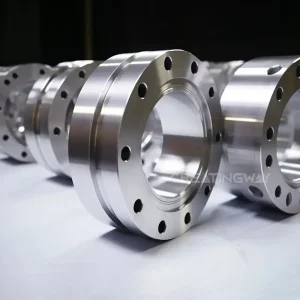
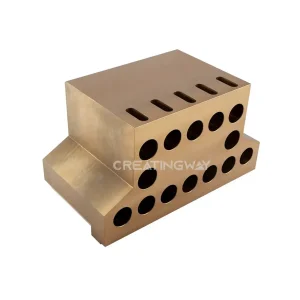
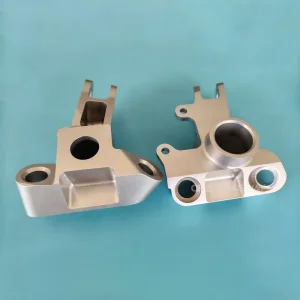
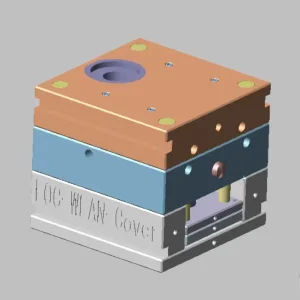
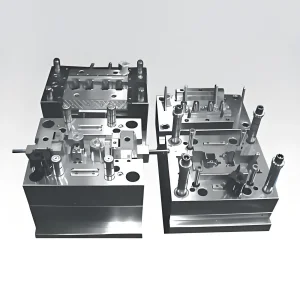
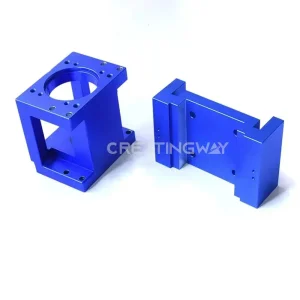
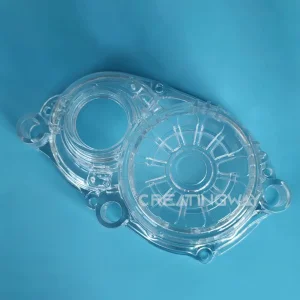
In high-precision manufacturing, selecting the optimal tooling architecture directly dictates product quality, dimensional accuracy, and production economics. A 3-plate injection mold, unlike a standard 2-plate mold, introduces a second parting line. This architectural setup comprises three distinct plate blocks: the stationary clamping plate (runner plate), the floating middle plate (cavity plate), and the moving plate (core plate). The inclusion of a floating stripper plate allows the runner system to reside on a separate plane from the molded component.
This structural arrangement enables pin-point gating directly into top surfaces or internal walls, eliminating the aesthetic or physical blemishes caused by standard side edge gates. During the mold-opening stroke, the two parting lines open sequentially. The first separation shears the pin-point gate directly from the molded part, freeing the runner system, while the second parting plane reveals the clean finished product. This dual-plane separation enables completely automated operation, making 3-plate molds the preferred choice for high-volume, automated production lines where secondary degating operations are not viable.
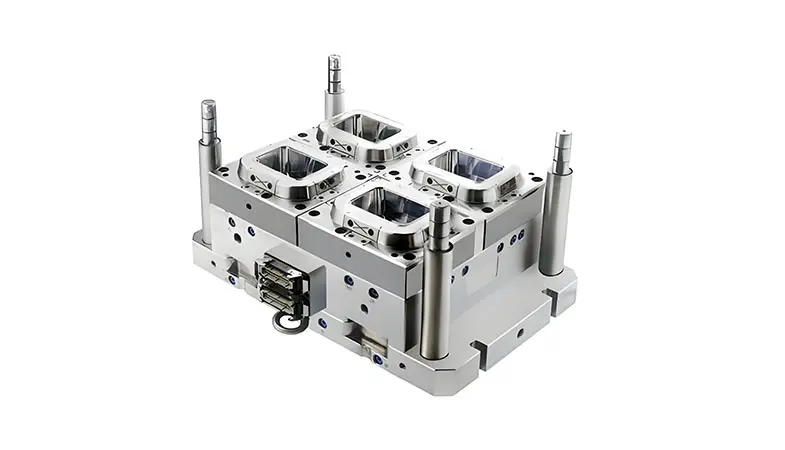
Understanding the design trade-offs between standard 2-plate molds and high-precision 3-plate molds helps you select the correct tooling configuration for your production requirements.
| Performance Metric | 2-Plate Injection Mold | 3-Plate Injection Mold | Industrial Implications & Strategy |
|---|---|---|---|
| Number of Parting Lines | Single Parting Plane | Dual (Two) Parting Planes | Dual planes facilitate automatic separation of parts and runner systems. |
| Gating Types & Configurations | Direct, edge, tab, sub-gates, or hot runners | Pin-point gating, multi-point distribution | Allows pinpoint gating on central decorative faces without witness marks. |
| Runner Automatic Degating | Manual trimming or sub-gate auto-shear | 100% Fully Automatic (Self-shearing) | Ideal for high-volume runs by eliminating post-mold processing costs. |
| Tooling Complexity & Maintenance | Lower complexity, standard maintenance | High complexity (stripper bolts, latch locks) | Requires precision engineering of sliding mechanisms and wear components. |
| Production Tooling Cost | Standard baseline cost | 15% to 30% Higher initial investment | Amortized over high volumes due to faster cycles and zero manual labor. |
We leverage advanced manufacturing processes to deliver high-quality, high-tolerance tooling solutions for challenging applications.
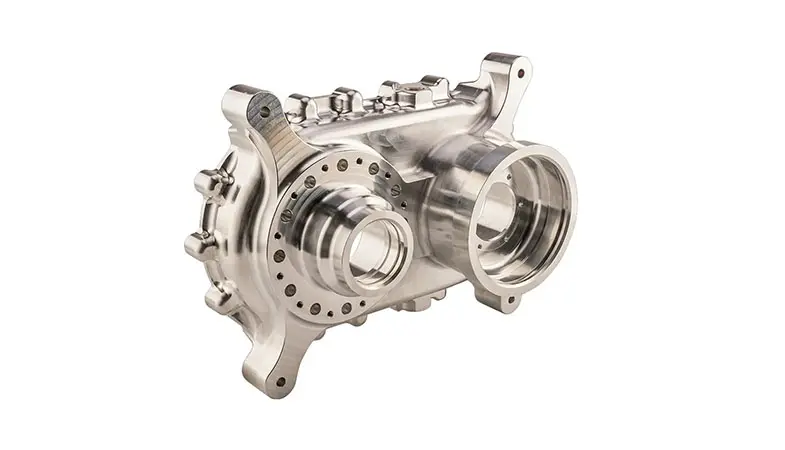
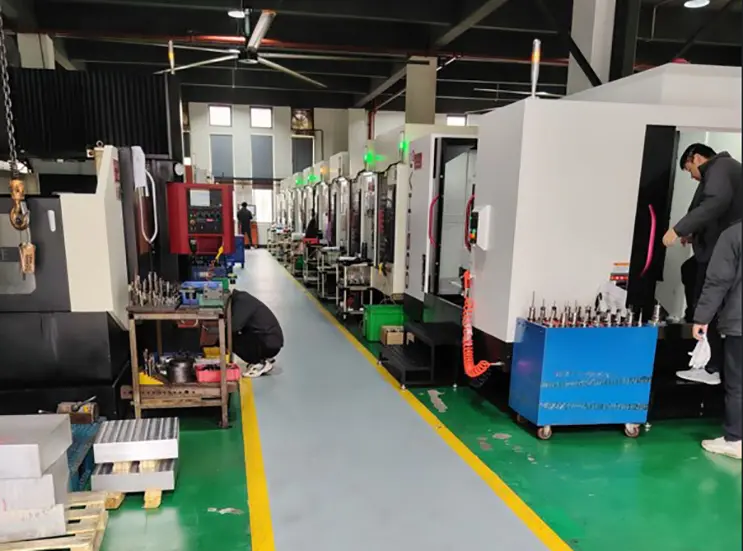
To produce highly reliable 3-plate molds, extreme plate alignment and guide pin accuracy are critical. Our ISO-certified facilities house high-speed CNC centers, EDM wire cutters, and precise grinding machines. We maintain strict control over every stage of the manufacturing process to deliver tooling that meets our clients' requirements.
Located in the heart of China’s industrial manufacturing corridor, we combine cost efficiency with advanced manufacturing capabilities to deliver high-quality tooling to global OEMs.
Our facility has immediate access to premium steel suppliers, heat treatment specialists, and surface coating services, allowing us to maintain rapid lead times on complex 3-plate tools.
We leverage advanced DFM simulation software to identify and resolve potential molding issues during the design phase, reducing our typical T1 sampling lead time to just 20-25 days.
Whether you require single-cavity prototype molds or multi-cavity production tools with automatic runner systems, we configure each mold to optimize your production efficiency.
We design and manufacture our tooling to comply with international standards, ensuring seamless integration into our clients' domestic production lines.
From initial design to final delivery, we follow a rigorous, quality-controlled process to ensure every tool meets your requirements.
Submit your 3D CAD files for a detailed Design for Manufacturing (DFM) review. We evaluate parting line placement, gating options, and ejector pin layouts within 24 hours.
We create a 3D mold assembly design and run mold flow analyses to optimize gate placement, identify potential weld lines, and ensure balanced cavity filling.
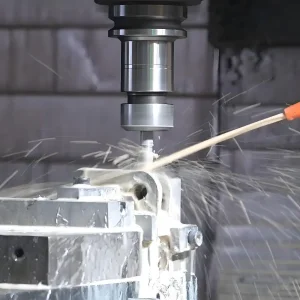
Our experienced machinists utilize high-speed CNC milling, wire EDM, and surface grinding to manufacture the core, cavity, and stripper plates to your exact specifications.
We perform T1 sampling runs to verify part dimensions, gate shearing performance, and surface finish. A full dimension report is provided with sample parts for client approval.
Our custom 3-plate molds and precision components are utilized across diverse industries requiring high cosmetic standards and automated production.
To stay competitive in global manufacturing, we continuously integrate new technologies into our design and manufacturing workflows. One major development is the integration of conformal cooling channels produced via 3D metal printing. These channels follow the geometry of the mold cavity, ensuring uniform heat dissipation and reducing cooling times by up to 30%, which directly improves cycle times and part quality.
Additionally, the transition toward eco-friendly and bio-based resins requires advanced tooling adjustments. These materials often exhibit narrower processing windows and higher shear sensitivities. Our engineering team addresses this by using advanced mold flow simulation tools to design optimal gate dimensions and hot-runner combinations, helping our clients run sustainable materials without sacrificing dimensional stability or cosmetic appearance.
We work with global automotive suppliers, medical device manufacturers, and consumer electronics brands to deliver reliable tooling solutions.





Review technical answers from our engineering team regarding 3-plate injection mold design, manufacturing, and operation.
An OEM should choose a 3-plate mold when pinpoint gating is required on a central cosmetic surface of a part, and the runner system must be automatically stripped and separated from the part during the molding cycle. This is typical for high-volume consumer electronics, automotive housings, and medical components where manual gate trimming is cost-prohibitive.
Proper sequencing and alignment are critical for a 3-plate mold. We integrate high-precision latch lock systems, puller pins, and stripper bolts to control the separation sequence of the plates. Our plates are machined on high-speed CNC centers to maintain tight dimensional tolerances, preventing binding and ensuring smooth operation over high production cycles.
For high-volume production runs (typically 500,000 to over 1,000,000 cycles), we recommend premium hardened tool steels. S136 or S136H is ideal for highly polished or transparent parts due to its excellent corrosion and wear resistance. For general structural cores and cavities, we recommend premium H13, NAK80, or 718H steels to ensure longevity and dimensional stability.
We design and manufacture our tooling to comply with recognized international design standards, including DME (North America) and HASCO (Europe). This ensures that components like guide pins, bushings, ejector pins, and cooling connections are fully compatible with your domestic injection molding machinery and can be easily sourced locally for maintenance.
DFM analysis allows our engineering team to review draft angles, wall thickness variations, gate locations, and potential cooling challenges before steel is cut. By identifying and addressing these issues during the 3D design phase, we can significantly reduce the number of trial iterations needed, helping to ensure the tool is right the first time and reducing overall project lead times.
Browse our additional high-tolerance CNC machined components and advanced injection tooling capabilities designed for demanding applications.
 Creatingtec