Strategic ODM Manufacturing Portfolio
In the contemporary landscape of high-precision manufacturing, the ODM Two Shot Injection Molding Process (also known as 2K or multi-component molding) has emerged as a cornerstone for innovation. Unlike traditional overmolding, which requires a secondary manual insertion process, two-shot molding utilizes a single machine cycle to inject two different resins into a single mold. This technique achieves a molecular bond between materials that is virtually inseparable, significantly enhancing product durability and aesthetic appeal.
As a leading Two Shot Injection Molding Process Manufacturer, Creatingtec understands that the demand for multi-functional components—combining rigid substrates with soft-touch elastomers—is skyrocketing. From medical devices requiring ergonomic grips to automotive electronics needing integrated seals, 2K molding eliminates assembly costs, reduces cycle times, and minimizes the risk of human error during secondary operations.
The "Information Gain" in today’s market lies not just in the ability to mold two materials, but in the mastery of interfacial rheology. We analyze how different polymers interact at a molecular level under varying thermal gradients. Our engineering team leverages advanced simulation software to predict gas traps and weld lines before a single piece of steel is cut, ensuring that your ODM project moves from concept to mass production with zero-defect reliability.
While many competitors offer standard injection molding, our Two-Shot process provides a unique Reduced Part Consolidation (RPC) advantage. By integrating gaskets, seals, and vibration dampeners directly into the structural housing, we reduce your bill of materials (BOM) and logistics complexity. This isn't just manufacturing; it's supply chain optimization.
Our 2K machines utilize high-speed rotary platens that rotate 180 degrees with micron-level precision. This allows for the simultaneous injection of the first and second shots, maximizing throughput.
For complex geometries where rotation is restricted, we employ hydraulic core-back systems. This allows for material changeover within the same cavity space without moving the part.
We specialize in challenging bonds: PC/TPU, ABS/TPE, and PA/Silicone. Our expertise ensures that the chemical adhesion exceeds the mechanical strength of the materials themselves.
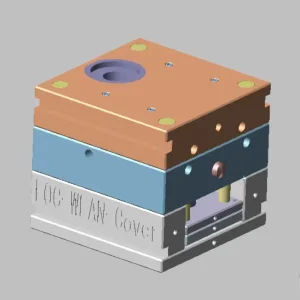
Tooling for two-shot molding requires 2x the engineering effort. We use S136 and H13 steel with specialized coatings to withstand the thermal stresses of dual-cycle injection.
Every project undergoes a rigorous Design for Manufacturing (DFM) check, analyzing wall thickness, gate locations, and shrink rates for both materials simultaneously.
Our facility is ISO 9001 and IATF 16949 certified. We utilize CMM, OMM, and non-destructive testing to verify seal integrity and dimensional accuracy.
Across the globe, from the Silicon Valley tech hubs to the German automotive heartlands, the procurement trend is shifting toward Integrated Manufacturing Solutions. Global enterprises are no longer looking for "part makers"; they are seeking "system integrators." The Two-Shot Injection Molding process is the answer to this macro-economic shift toward miniaturization and enhanced user experience (UX).
Internal controls, illuminated buttons, and weatherproof gaskets.
Non-slip surgical grips, multi-color drug delivery systems.
Wearable tech, waterproof housings for smartphones and audio.
Lightweight damping components and cockpit interface panels.
Soft-touch sensors and durable joints for industrial cobots.
Seamless Integration from Concept to Completion

Upload CAD Drawing
Submit your multi-material designs for a comprehensive engineering review.

Quote with DFM
Receive a detailed feasibility report and cost analysis within 24 hours.

Order Confirmation
We finalize tool designs and initiate the high-precision mold making process.

Project Completed
Rapid prototyping in 1-3 days; global logistics support to your doorstep.
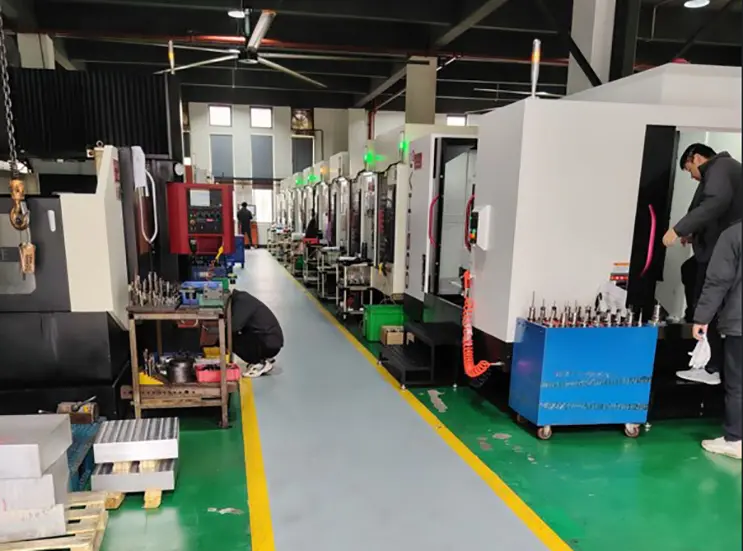
As we look toward 2030, the ODM Two Shot Injection Molding process is evolving into Industry 4.0 "Smart Molding." Creatingtec is at the forefront of integrating sensor technology directly into the mold to monitor viscosity and pressure in real-time. This ensures that even with varying batches of raw material, the final product remains within tight tolerances.
Furthermore, our commitment to sustainability is driving our research into Bio-based Multi-Material Integration. We are developing techniques to bond recycled substrates with bio-elastomers, helping our global partners meet their ESG (Environmental, Social, and Governance) targets without compromising on part performance or aesthetics.
Compliance & Localization: We provide full localized support, ensuring all products meet REACH, RoHS, and FDA standards. Our engineering team bridges the gap between Eastern manufacturing efficiency and Western quality expectations.
Expert Insights into the 2K Injection Molding Process
Overmolding involves two separate steps where a part is molded and then manually or robotically moved to another mold. Two-shot molding happens in a single machine with a rotating mold, resulting in a superior chemical bond and much lower labor costs.
The most common combinations include a rigid plastic (like PC, ABS, or Nylon) and a soft elastomer (like TPE, TPU, or Silicone). The key is to select materials with compatible melting points to ensure a strong molecular bond.
While the initial tooling phase takes longer (approx. 4-8 weeks) due to complexity, the production cycle time is significantly shorter than overmolding because it eliminates the need for a secondary cooling and insertion phase.
Two-shot molding is typically optimized for high-volume production due to the tooling investment. However, for complex medical or aerospace parts where assembly precision is critical, it can be justified at lower volumes (5,000+ units).
Yes, two-shot molding is often used for aesthetic purposes, such as illuminated logos, multi-colored buttons, or transparent windows integrated into opaque housings.
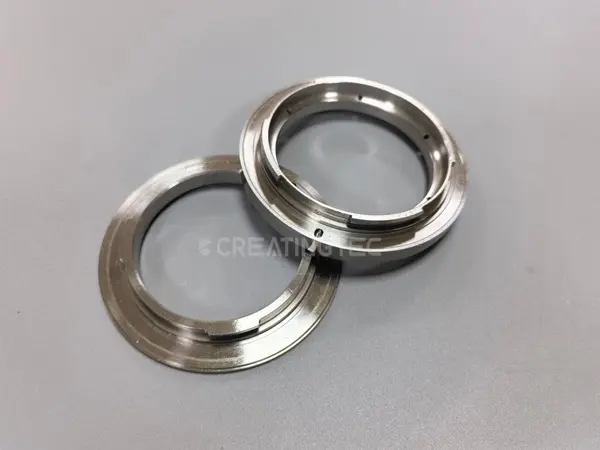
Creatingtec maintains a strict quality control workflow, certified to international standards...
READ MORE
To achieve zero-defect manufacturing for complex metal structures, Creatingtec deploys...
READ MORE
In the global hardware manufacturing landscape, the journey from a design blueprint...
READ MOREGlobal Manufacturing Solutions Ready for Export
 Creatingtec