Why Choose Aerospace CNC Machined Parts for Your Project?

Time:2026-10-23 Author:Charlotte
0%

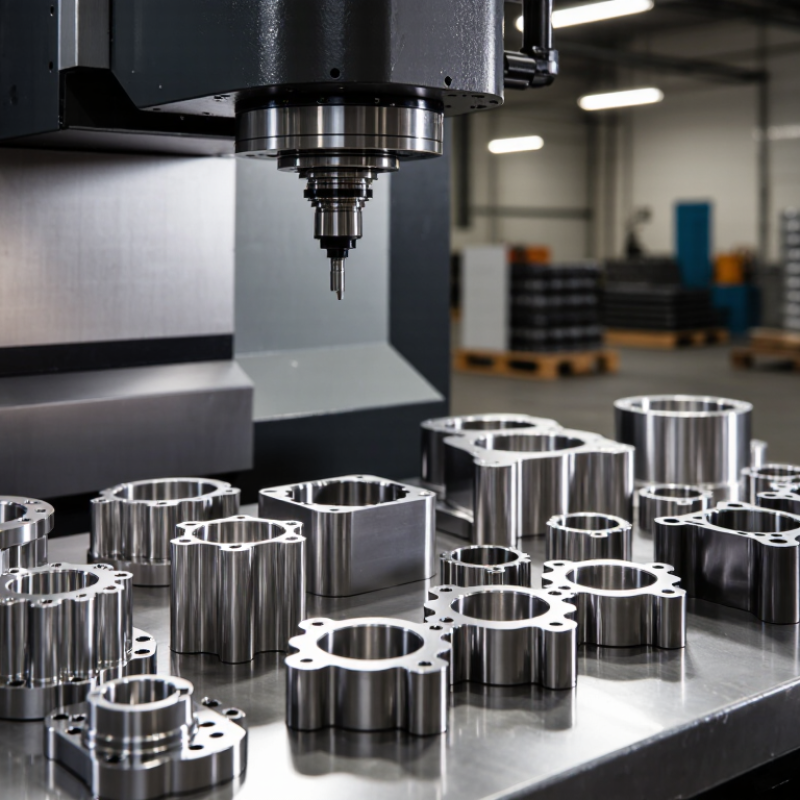
Aerospace Cnc Machined Parts support aircraft programs where accuracy, repeatability, and material performance cannot be treated casually. Boeing’s 2024 Commercial Market Outlook projects demand for 43,975 new commercial airplanes through 2043. Airbus reaches a similar conclusion, forecasting 42,430 aircraft deliveries during the same period. These figures suggest sustained pressure on suppliers, especially those producing brackets, actuator housings, landing-gear components, and engine-adjacent parts.

CNC machining creates precise features directly from aerospace-grade aluminum, titanium, stainless steel, and nickel alloys. A five-axis machine can reach complex surfaces while reducing repeated setups. That matters when a small alignment error can affect assembly hundreds of times downstream. Thomas Kurfess, a manufacturing engineer and former NIST director, has stated, “Manufacturing is the backbone of our economy.” His observation also applies to aerospace production, where process discipline supports flight safety, certification, and long-term reliability.

The choice is not automatically simple. Machining may generate higher material waste than additive manufacturing, particularly with titanium billets. Tool wear, inspection costs, and programming time also deserve honest evaluation. Still, Aerospace Cnc Machined Parts offer a practical balance of dimensional control, surface quality, and production flexibility. Deloitte’s 2024 Aerospace and Defense Industry Outlook highlights continuing supply-chain constraints and pressure to improve manufacturing resilience. For project teams, that means selecting a supplier with documented traceability, calibrated inspection equipment, and real experience with aerospace specifications. The shiny prototype is not enough. Consistent evidence matters more.
Why Choose Aerospace CNC Machined Parts for Your Project?

What Are Aerospace CNC Machined Parts?

Aerospace CNC machined parts are precision components produced by computer-controlled cutting machines. These machines remove material from aluminum, titanium, stainless steel, or high-performance plastics. The process creates accurate shapes for brackets, housings, mounts, fittings, and structural assemblies. Each part begins with a digital design and ends with controlled inspection.

In aerospace work, accuracy is not simply a production target. It affects fit, weight, vibration, and service reliability. Skilled machinists monitor tool wear, surface finish, dimensional tolerance, and heat during cutting. They also review material certificates and inspection records. Coordinate measuring machines can verify critical features, while visual checks may reveal burrs or surface damage. From practical experience, small edge defects often deserve more attention than expected. One overlooked detail can delay assembly.

Tips: Define critical dimensions clearly before machining. Select materials according to strength, temperature, corrosion, and weight requirements. Ask for inspection reports and traceability documents. Review the first article carefully, even when the drawing appears complete. Designs sometimes contain assumptions that machining exposes. That is useful feedback, not failure. A design may need a wider tool path, better access for inspection, or a simpler internal corner. These changes can improve manufacturability while preserving performance. Reliable aerospace parts come from disciplined engineering, careful machining, and honest review of every stage.

Which Materials and Processes Support Aerospace Applications?

Why Choose Aerospace CNC Machined Parts for Your Project?

Aerospace components demand strength, low weight, and predictable performance. CNC machining supports these needs through tight dimensional control and repeatable production. Aluminum alloys suit brackets, housings, and structural panels because they are light and machine efficiently. Titanium offers higher strength and corrosion resistance for stressed fittings. Stainless steel and nickel alloys perform better near heat, pressure, or aggressive environments. Material selection is not always elegant. A lighter alloy may machine beautifully, yet fail a temperature or fatigue requirement.

The process must match the part, not only the drawing. Five-axis milling can reach complex surfaces while reducing repeated setups. Turning produces accurate shafts, sleeves, and threaded features. Deep-hole drilling requires careful chip control and tool cooling. Thin walls need conservative cutting parameters to prevent vibration or distortion. Engineers should also review grain direction, residual stress, surface finish, and post-machining treatments. Anodizing, passivation, or controlled heat treatment may improve durability, but each option needs process validation. Small oversights can become expensive.

Tips: Confirm material certification before machining begins. Define critical dimensions and inspection methods early. Use coordinate measuring equipment for complex profiles. Keep traceable records for tools, operators, and revisions. Prototype testing remains valuable, even when the CAD model looks perfect. Sometimes, the first design needs changing.

Why Choose Aerospace CNC Machined Parts for Your Project? - Which Materials and Processes Support Aerospace Applications?

Material Key Characteristics Typical Aerospace Applications Suitable CNC Processes Important Manufacturing Considerations
Aluminum Alloys
6061-T6 / 7075-T6
Low density, good machinability, useful strength-to-weight ratio, and strong corrosion resistance when properly treated. 7075-T6 generally provides higher strength than 6061-T6. Aircraft brackets, housings, structural fittings, panels, frames, tooling, and lightweight enclosures. 3-axis to 5-axis milling, turning, drilling, tapping, pocketing, and precision finishing. Control heat generation and clamping distortion. Surface treatments such as anodizing may improve wear and corrosion performance.
Titanium Alloy
Ti-6Al-4V
High specific strength, excellent corrosion resistance, and good performance at elevated temperatures. It is more difficult to machine than aluminum. Engine components, structural connectors, landing-gear parts, brackets, fastener features, and highly loaded airframe components. Rigid 5-axis milling, turning, drilling, thread milling, and low-speed high-torque machining. Use sharp tools, controlled cutting parameters, effective coolant delivery, and secure workholding to limit heat, work hardening, and tool wear.
Stainless Steel
17-4 PH
Precipitation-hardening stainless steel with high strength, good dimensional stability, and useful corrosion resistance across a range of aerospace environments. Valve bodies, actuator components, brackets, shafts, fittings, and structural hardware. CNC turning, milling, drilling, reaming, thread machining, and post-machining heat treatment. Specify the required heat-treatment condition because hardness, strength, machinability, and corrosion performance vary by condition.
Nickel Alloy
Inconel 718
High strength and oxidation resistance at elevated temperatures, with strong resistance to creep and fatigue in demanding environments. Engine cases, combustion-related hardware, turbine components, fasteners, and high-temperature structural parts. Rigid CNC milling, turning, drilling, broaching where appropriate, and 5-axis contour machining. Expect low cutting speeds, high cutting forces, rapid tool wear, and heat concentration. Stable fixturing and suitable carbide tooling are essential.
PEEK
Engineering Thermoplastic
Low density, good chemical resistance, low moisture absorption, electrical insulation capability, and useful temperature performance for selected non-structural parts. Insulators, seals, bushings, cable supports, guides, lightweight covers, and wear components. CNC milling, turning, drilling, reaming, and engraving with sharp tools. Manage heat and clamping pressure to prevent melting, distortion, burr formation, and dimensional change after machining.

CNC Machining Processes Commonly Used in Aerospace Parts

Process Best Suited For Primary Advantages Typical Aerospace Requirements
3-Axis Milling Flat surfaces, pockets, slots, holes, and relatively accessible features. Efficient setup, broad material compatibility, and cost-effective production for simpler geometries. Tight dimensional control, clean edge conditions, and documented inspection results.
5-Axis Milling Complex contours, angled surfaces, deep cavities, and parts requiring multiple orientations. Fewer setups, improved tool access, better surface continuity, and reduced cumulative alignment error. Careful fixture design, collision checking, tool-path verification, and inspection of complex profiles.
CNC Turning Cylindrical, conical, threaded, and rotationally symmetrical components. Consistent diameters, efficient material removal, and repeatable production of shafts and fittings. Control of concentricity, runout, surface finish, thread dimensions, and burrs.
Precision Drilling and Reaming Fastener holes, bearing seats, alignment holes, and close-tolerance bores. Accurate hole size, location, cylindricity, and repeatability when properly controlled. Verify hole position, perpendicularity, surface condition, edge break, and foreign-object cleanliness.
Post-Machining Finishing Parts requiring enhanced corrosion resistance, wear resistance, appearance, or controlled surface properties. Can improve service life, surface protection, electrical properties, or compatibility with assembly requirements. Define coating thickness, masking areas, dimensional allowances, adhesion requirements, and final inspection criteria.

Note: Material selection and process parameters should be validated against the component’s load, temperature, corrosion exposure, tolerance, surface-finish, traceability, and applicable aerospace specification requirements.

How Do CNC Machined Parts Meet Aerospace Standards?

Why Choose Aerospace CNC Machined Parts for Your Project?

Aerospace CNC machined parts must meet strict requirements for safety, repeatability, and traceability. CNC machining supports these goals through controlled toolpaths, stable cutting conditions, and accurate dimensional control. Critical features, such as mounting holes and sealing surfaces, can be produced within demanding tolerances. Each part should match the approved drawing, material specification, and process instructions. Material certificates also help confirm alloy identity and heat-treatment history.

Tips: Review tolerances before machining. Define inspection points clearly. Request records for materials, calibration, and final measurements. Use coordinate measuring equipment when features affect assembly or flight performance. Surface finish deserves attention too. A smooth bore may prevent leakage, while an incorrect finish can increase wear. These details often decide whether a part performs reliably in service.

Quality depends on more than machine accuracy. Experienced technicians monitor tool wear, temperature changes, burrs, and setup repeatability. Inspection plans can include first-article checks, in-process measurements, and final verification. Aerospace projects may also require documented nonconformance control and approved process changes. A perfect drawing does not guarantee a perfect result. Small assumptions can still create trouble. Clear communication between design, machining, and inspection teams reduces that risk. Review the evidence, not only the appearance.

What Benefits Do They Offer for Aerospace Projects?

Why Choose Aerospace CNC Machined Parts for Your Project?

Aerospace CNC machining offers repeatable accuracy for parts that face vibration, pressure, and temperature changes. Tight dimensional control helps maintain reliable fits around engine mounts, brackets, and fluid passages. CNC systems also produce complex shapes from titanium, aluminum, and high-strength stainless steel. These materials support lighter structures without sacrificing mechanical performance.

Demand is becoming more demanding. The International Air Transport Association projects global passenger traffic could reach 8.6 billion journeys by 2043, nearly twice the 2023 level. The Federal Aviation Administration’s 2024 Aerospace Forecast also expects continued growth in the commercial aircraft fleet. More aircraft create stronger pressure for dependable replacement parts and efficient production. CNC machining helps manufacturers repeat approved designs across small and medium production runs.

Traceability matters. Experienced suppliers can document material certificates, inspection results, tool conditions, and revision history. Coordinate measuring machines verify critical dimensions before shipment. A 0.02-millimeter deviation may seem minor, yet it can affect alignment during assembly. That risk deserves attention. CNC is not automatically perfect; poor fixturing, tool wear, or unclear drawings can still create defects. Engineers should review tolerances, surface finishes, and inspection plans before cutting metal.

Why Choose Aerospace CNC Machined Parts for Your Project?

Precision CNC machining enables aerospace components to be produced from high-performance materials with tight dimensional control. The chart compares representative yield strength-to-density ratios, a useful indicator of structural efficiency in weight-sensitive aerospace designs.

Key benefit: A higher yield strength-to-density ratio indicates greater load-carrying capability for a given material weight, supporting lightweight and durable aerospace components.

Representative room-temperature values: 2024-T3 aluminum: 324 MPa yield strength and 2.78 g/cm³ density; 7075-T6 aluminum: 503 MPa and 2.81 g/cm³; Ti-6Al-4V: 880 MPa and 4.43 g/cm³. Actual values vary with processing, heat treatment, and product form.

How Should You Select the Right Aerospace CNC Supplier?

Selecting an aerospace CNC supplier starts with evidence, not a polished website. Ask for AS9100 certification, a current quality manual, and documented inspection procedures. The ISO Survey 2022 recorded about 1.26 million ISO 9001 certificates worldwide, so basic certification alone proves little. Request process capability data, calibration records, and sample inspection reports.

Traceability matters. Each material certificate should follow the part from purchase order to final shipment. Check whether the supplier can control revision changes, nonconforming material, and first-article inspection. SAE AS9102 is especially useful for aerospace production approval. A serious supplier should explain these controls without hiding behind technical language. Clear answers matter.

Review capacity carefully. The Aerospace Industries Association’s 2023 Facts & Figures reported approximately 2.2 million U.S. aerospace and defense jobs. That scale creates pressure on skilled labor and delivery schedules. Ask who performs programming, inspection, and final release. Confirm backup equipment and realistic lead times. Visit the facility if possible. Seeing chips on the floor is not enough. Observe measurement discipline.

Your drawing deserves a manufacturing review before production. The supplier should question thin walls, tight tolerances, difficult datums, and unsuitable alloys. I have seen attractive quotations fail because finishing requirements were vague. That is an uncomfortable lesson. Require a written quotation with tolerances, inspection scope, material standards, packaging, and change-control terms. A capable partner may refuse an impossible deadline. That response can be safer than an easy promise.

FAQS

Which materials are commonly used for aerospace CNC machined parts?

Aluminum is lightweight and suits brackets, housings, and structural panels. Titanium handles higher stress and resists corrosion. Stainless steel and nickel alloys suit heat, pressure, and aggressive environments.

How should engineers choose the right aerospace material?

Match the material to strength, temperature, fatigue, corrosion, and weight requirements. A lightweight alloy may machine well but fail under heat. Material selection deserves careful review.

Which machining processes support complex aerospace components?

Five-axis milling reaches complex surfaces with fewer setups. Turning creates accurate shafts, sleeves, and threads. Deep-hole drilling needs chip control and effective tool cooling.

How are thin aerospace walls protected during machining?

Use conservative cutting parameters to reduce vibration and distortion. Secure fixturing also matters. Even a good drawing cannot prevent every machining problem.

What benefits does CNC machining offer aerospace projects?

CNC machining provides repeatable dimensions for parts exposed to vibration, pressure, and temperature changes. It also supports complex shapes and small or medium production runs. Reliable fits matter.

Why are inspection plans important for aerospace components?

Coordinate measuring equipment verifies complex profiles and critical dimensions. A 0.02-millimeter deviation may affect assembly alignment. Tiny errors can become expensive.

What records should be maintained during aerospace CNC production?

Keep material certificates, inspection results, tool conditions, operator details, and revision history. These records support traceability. Missing records create avoidable uncertainty.

Are post-machining treatments always necessary?

Anodizing, passivation, and controlled heat treatment may improve durability. Each treatment requires process validation. More treatment is not automatically better.

Should aerospace parts undergo prototype testing?

Yes, prototype testing can reveal vibration, fit, fatigue, or distortion issues. A perfect CAD model may still hide practical weaknesses. Sometimes, the design needs changing.

Conclusion

Aerospace Cnc Machined Parts are precision-engineered components manufactured with computer-controlled equipment to meet the demanding requirements of aircraft, spacecraft, and related systems. They can be produced from lightweight aluminum, titanium, stainless steel, and high-performance alloys, depending on the application. Advanced milling, turning, drilling, and multi-axis machining processes help create complex geometries, tight tolerances, and consistent surface finishes.

These parts support aerospace projects by reducing weight, improving durability, and maintaining reliable performance under vibration, temperature changes, and demanding operating conditions. Strict inspection, traceability, dimensional verification, and process control help ensure compliance with aerospace quality and safety expectations. When selecting a supplier, project teams should evaluate technical expertise, material capabilities, quality systems, equipment accuracy, production capacity, communication, and delivery reliability. The right partner should also understand design requirements and provide practical manufacturing feedback, helping achieve a balance between performance, cost, lead time, and long-term dependability.


Charlotte

Charlotte

Charlotte is a seasoned marketing professional with a deep understanding of the company's portfolio and a passion for elevating its presence in the market. With a keen eye for detail and a commitment to excellence, she ensures that our professional blog is regularly updated with insightful articles......