Top Medical Device CNC Machining Parts Manufacturers

Time:2026-10-19 Author:Liam
0%

Medical device manufacturing is moving toward tighter tolerances, shorter development cycles, and stronger supplier accountability. A small component can influence an implant, surgical instrument, or diagnostic assembly. That responsibility makes supplier selection more than a price comparison.

Grand View Research reported that the global medical devices market reached approximately USD 512.3 billion in 2022. It projects the market to approach USD 799.7 billion by 2030, with a 5.5% compound annual growth rate. This expansion increases demand for precise, repeatable, and documented machining processes. Every Medical Device Cnc Machining Part must support reliable performance under controlled manufacturing conditions.

The leading manufacturers usually demonstrate practical experience with stainless steel, titanium, cobalt-chrome alloys, PEEK, and other medical-grade materials. They also understand surface finishing, burr control, dimensional inspection, and clean handling. These details matter. A sharp edge inside a miniature surgical tool is not a minor defect.

ISO 13485 remains a key quality framework for medical device suppliers. The U.S. FDA’s Quality Management System Regulation also aligns more closely with ISO 13485 requirements from February 2026. Therefore, capable CNC partners should provide traceability, process validation, inspection records, and clear change-control procedures. Certifications alone are not enough. That point is easy to overlook.

This guide examines top medical device CNC machining parts manufacturers through quality systems, equipment capability, material expertise, lead times, and communication. Public information can be incomplete, however. Buyers should verify certificates, sample inspection reports, and production controls before approving any supplier. A polished website cannot replace evidence from the shop floor.
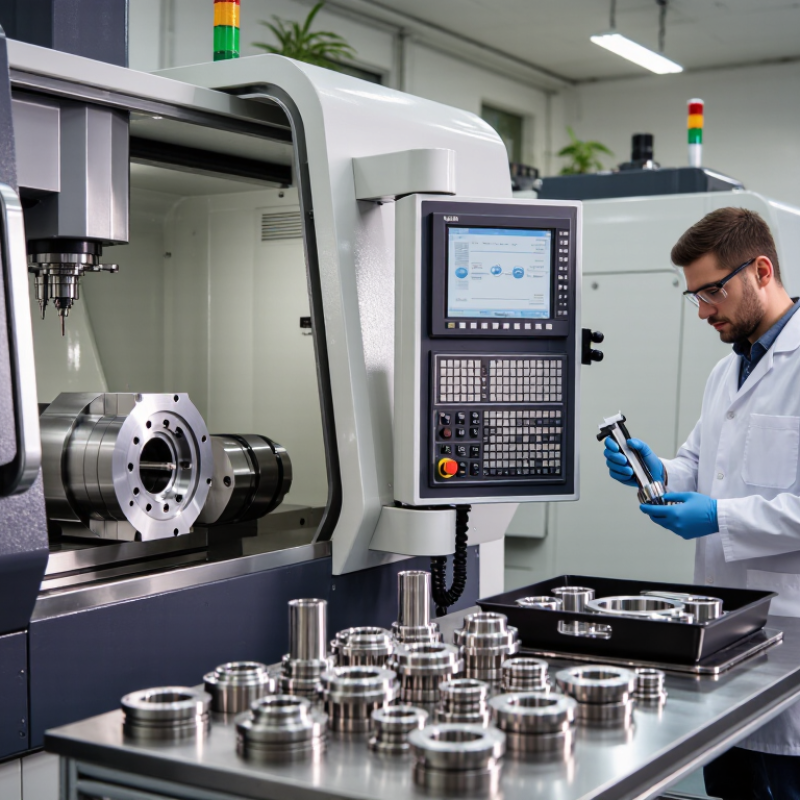
Top Medical Device CNC Machining Parts Manufacturers

What Are Medical Device CNC Machining Parts?

Medical device CNC machining parts are precision components cut from metal or engineering plastics by computer-controlled machines. They include surgical instrument shafts, implant trial parts, diagnostic housings, bone plates, and connector bodies. Each part begins with a digital drawing, then passes through milling, turning, drilling, deburring, cleaning, and inspection.

The process supports tight features, smooth surfaces, and repeatable dimensions. Common materials include titanium, stainless steel, cobalt-chromium alloys, PEEK, and medical-grade aluminum. Material selection depends on strength, corrosion resistance, sterilization exposure, and patient contact. Tiny parts matter.

Grand View Research reported that the global medical devices market reached about USD 512 billion in 2022. Its continued growth increases demand for reliable, traceable component production. Fortune Business Insights also projected the market to approach USD 800 billion by 2030. These figures do not guarantee machining demand, but they show the sector’s scale.

For regulated production, manufacturers often align quality systems with ISO 13485 and maintain material certificates, inspection records, and revision-controlled drawings. Critical dimensions may require coordinate measuring machines, optical inspection, or process capability studies. In practice, perfect repeatability is difficult. Tool wear, heat, burrs, and cleaning residues can still create problems. A strong supplier therefore reviews manufacturability early, validates inspection methods, and documents every controlled change.

What Are Medical Device CNC Machining Parts?

Medical device CNC machining parts are precision components manufactured from biocompatible metals or engineering polymers. Common examples include bone screws, surgical instrument components, implant housings, endoscope parts, and diagnostic equipment fittings.

The chart compares typical material densities used in medical CNC machining. Density values are approximate nominal values at room temperature and are not manufacturer or market-share data.

Materials and Design Requirements for Medical Components

Medical device CNC machining demands more than tight dimensions. Material selection must match the component’s clinical environment, sterilization method, and expected service life. Common choices include medical-grade stainless steel, titanium, cobalt-chrome alloys, and PEEK. Each material behaves differently during cutting. Titanium may generate heat, while PEEK can deform under excessive clamping pressure. Surface finish also matters. Tiny scratches can trap contaminants or affect tissue contact.

Design requirements should support reliable production, not only attractive drawings. Internal corners need suitable radii for cutting tools. Deep cavities may increase vibration and dimensional variation. Threads, holes, and sealing surfaces require clear tolerance strategies. Engineers should define critical dimensions, surface roughness, burr limits, and inspection methods. Traceable material certificates and documented process controls strengthen manufacturing reliability. A drawing can look complete and still hide a sterilization problem.

Tips: Keep walls uniform where possible. Add radii to reduce tool stress. Separate cosmetic surfaces from functional surfaces. Confirm material compatibility before machining. Review tolerances with the manufacturer early. Small changes can prevent expensive rework.

Experienced manufacturers also verify parts through calibrated measurement equipment and controlled inspection records. However, no process is perfect. Tool wear, operator judgment, and changing batch behavior can still create variation. Design reviews should challenge assumptions, especially around fatigue, cleaning, and repeated sterilization. A practical prototype may reveal issues that computer models miss. That lesson is easy to overlook.

Top Medical Device CNC Machining Parts Manufacturers - Materials and Design Requirements for Medical Components
Material Common Medical-Grade Standard Typical Material Characteristics Suitable CNC-Machined Components Key Design Requirements Machining Considerations Sterilization and Service Notes
Titanium Alloy Ti-6Al-4V ASTM F136; ASTM B265; ISO 5832-3 High strength-to-weight ratio, excellent corrosion resistance, good biocompatibility, and a relatively low elastic modulus compared with stainless steel. Bone screws, plates, surgical instruments, implant housings, fixation components, and custom orthopedic parts. Use generous internal radii, avoid sharp transitions, control burrs, specify a low surface roughness for mating or implant surfaces, and prevent contamination from dissimilar metals. Low thermal conductivity and work hardening require rigid fixturing, sharp tools, controlled cutting parameters, and effective coolant management. Commonly compatible with steam sterilization and other validated medical sterilization processes. The finished surface and cleaning process must be validated for the intended use.
Cobalt-Chromium Alloy ASTM F75; ASTM F90; ISO 5832-4 Very high wear resistance, high strength, excellent corrosion resistance, and a high elastic modulus. Orthopedic implant components, wear-resistant surgical parts, dental frameworks, and high-load instrument components. Design for sufficient clearance around mating parts, avoid stress concentrations, define tight control of critical interfaces, and specify surface finishing for wear surfaces. High hardness and work hardening can accelerate tool wear. Stable setups, carbide tooling, and conservative cutting conditions are generally required. Suitable sterilization depends on the complete assembly and surface treatment. Passivation or other approved finishing may be required to remove processing residues.
316L Stainless Steel ASTM F138; ASTM F139; ISO 5832-1; ASTM F899 Good corrosion resistance, toughness, machinability, and dimensional stability. Widely used where high strength is needed without implant-grade titanium. Surgical instruments, guide components, trays, fasteners, housings, orthopedic hardware, and fluid-handling parts. Specify corrosion-resistant condition, avoid crevices that retain cleaning fluids, provide drainability, and use radiused edges on parts handled by clinicians. Work hardening is possible. Maintain consistent feeds, avoid dwelling, remove burrs completely, and separate stainless steel from carbon-steel contamination. Generally compatible with repeated steam sterilization when the material condition, surface finish, and cleaning chemistry are properly controlled.
17-4 PH Stainless Steel ASTM F899; ASTM A564 High strength, good hardness, good corrosion resistance, and heat-treatable mechanical properties. Instrument bodies, surgical handles, clamps, fixtures, actuator components, and non-implant structural parts. Define the required heat-treatment condition, account for dimensional changes after heat treatment, and avoid narrow deep slots that are difficult to clean. Machinability varies with material condition. Finish machining may be required after heat treatment to achieve final dimensions. Suitable for many reusable devices after validated cleaning and sterilization. Surface passivation can improve corrosion resistance where required.
Nitinol ASTM F2063; ISO 25539 for applicable vascular devices Shape-memory and superelastic behavior, high recoverable strain, and good corrosion resistance when properly processed. Specialized surgical tools, guide components, flexible mechanisms, and shape-memory medical device parts. Control alloy condition, transformation temperature, edge quality, burr removal, and surface integrity. Avoid unintended notches that can initiate fatigue cracks. Machining can be difficult because of work hardening and elastic recovery. Wire electrical discharge machining or specialized tooling may be selected for complex geometries. Surface oxide condition and fatigue performance require process validation. Sterilization compatibility must be assessed for the complete device design.
PEEK ASTM F2026; ISO 10993 evaluation as applicable High chemical resistance, low moisture absorption, high temperature capability, electrical insulation, and good strength-to-weight ratio. Insulating components, instrument jaws, spinal or orthopedic components, bushings, seals, and lightweight medical housings. Account for thermal expansion, avoid thin unsupported walls, use radiused corners, and specify material grade and filler content where performance is critical. Control heat generation and chip evacuation. Sharp tools and stable clamping help prevent melting, deformation, and dimensional drift. Many PEEK grades tolerate steam sterilization, but the actual grade, cycle count, geometry, and mechanical requirements must be validated.
PPSU ISO 10993 evaluation as applicable High impact strength, excellent hydrolysis resistance, transparency or translucency in selected grades, and good resistance to repeated sterilization. Reusable instrument handles, sterilization trays, fluid connectors, housings, and transparent or translucent medical components. Use uniform wall thickness, avoid sharp internal corners, allow for polymer thermal expansion, and design cleaning channels without trapped volumes. Use sharp, polished cutting tools and moderate clamping pressure. Excessive heat can cause burrs, whitening, or local deformation. Often selected for repeated steam sterilization, but validation should include the intended temperature, pressure, exposure time, and number of cycles.
UHMWPE ASTM F648; ISO 5834-1 and ISO 5834-2 Very low friction, high abrasion resistance, chemical resistance, and excellent impact toughness. Wear pads, bearings, spacers, instrument guides, low-friction inserts, and selected orthopedic components. Design for creep and deformation under sustained load, provide adequate support, avoid sharp notches, and define surface finish for sliding interfaces. Material flexibility can cause deflection during machining. Use sharp tools, light clamping, controlled feeds, and support for thin sections. Sterilization selection must consider oxidation, wear performance, and the intended implant or device application. Do not assume all grades have identical behavior.
PEI ISO 10993 evaluation as applicable High stiffness, dimensional stability, electrical insulation, chemical resistance, and good elevated-temperature performance. Instrument bodies, electrical insulators, sensor mounts, diagnostic equipment components, and reusable device housings. Provide draft-free machinable geometry, use radiused corners, account for anisotropic behavior in molded stock, and avoid stress concentrations around holes. Sharp tooling and controlled heat are important. Excessive cutting pressure can cause cracking or distortion in thin features. Some grades are compatible with steam sterilization; the selected grade and repeated-cycle performance must be verified for the application.
Aluminum Alloy 6061-T6 ASTM B221; ASTM B209 Low density, good machinability, good corrosion resistance when properly finished, and moderate mechanical strength. Diagnostic equipment frames, fixtures, instrument bases, covers, prototypes, and non-implant structural components. Use anodizing or another validated finish where surface protection is required, isolate from galvanically incompatible metals, and avoid porous or difficult-to-clean features. Highly machinable, but thin walls can distort. Use proper chip evacuation and avoid excessive clamping force. Not generally selected for permanent implants. Surface treatment and sterilization compatibility must be verified for reusable medical equipment.

Engineering note: Material standards, biocompatibility, dimensional tolerances, surface roughness, cleaning procedures, sterilization cycles, and inspection methods must be confirmed against the device classification, intended clinical use, and applicable regulatory requirements. The listed characteristics are typical engineering guidance rather than universal acceptance criteria.

How Medical Device CNC Machining Is Performed

Medical device CNC machining starts with a careful review of the part drawing, tolerances, material, and intended clinical use. Engineers convert the approved CAD model into machining instructions through CAM software. They select cutting tools, spindle speeds, feed rates, and a suitable workholding method. The setup matters. Small errors multiply.

Machinists often use multi-axis equipment to reach complex surfaces without repeated repositioning. This reduces alignment errors around threads, slots, and tiny channels. Biocompatible metals and engineering polymers require different strategies.

Titanium may need controlled cutting heat, while polymer parts need sharp tools and gentle clamping. Coolant selection also matters, especially when residue could affect later cleaning.

After machining, operators remove burrs under magnification and inspect critical dimensions with calibrated gauges, probes, or coordinate measuring equipment. Surface finish, thread accuracy, and edge condition receive close attention. Each part should have traceable material records, inspection results, and process revisions. These records support reliable production and quality-system requirements.

From practical machining experience, the first finished part is rarely perfect. Tool deflection, thermal growth, or an overlooked corner can change the result. That is why engineers compare inspection data with the original process assumptions and adjust carefully. Over-polishing can damage a precise edge. Excessive clamping can distort a thin wall. Clean handling, controlled packaging, and documented inspections help protect the part after machining, although these steps are sometimes treated as secondary. They should not be.

Quality Control and Regulatory Compliance

Top Medical Device CNC Machining Parts Manufacturers

Quality control begins before metal reaches the CNC machine. Experienced manufacturers review drawings, tolerances, surface requirements, and material specifications with medical engineers. They identify risks early, especially on small implants, surgical tools, and fluid-contact components. A controlled quality system should follow applicable requirements, such as ISO 13485 and regional medical device regulations. Documented procedures matter because memory is not a reliable production record.

Each material lot should have certificates, identification, and traceability through machining and inspection. Operators may check critical dimensions with calibrated gauges, while coordinate measuring machines verify complex features. Inspection reports should connect measurements to part numbers, revision levels, and production lots. Clean handling also deserves attention. Fine chips, oils, and particles can compromise later assembly or sterilization processes. Validation records should support special processes, including passivation, deburring, and surface finishing.

No inspection plan is perfect. That is worth admitting. Tool wear, temperature changes, and unclear drawings can still create unexpected variation. Strong manufacturers investigate nonconforming parts instead of hiding them. They use root-cause analysis, corrective actions, and documented approval before releasing revised production. Audits, employee training, and supplier reviews provide further evidence of reliability. Clear communication helps too. A technically correct part can fail when paperwork, labeling, or change control is incomplete.

How to Choose a Top Medical Device CNC Manufacturer

Choosing a top medical device CNC manufacturer requires more than comparing hourly rates. Review its ISO 13485 certification, inspection records, and experience with implantable or diagnostic components. The 2023 ISO Survey reported more than 30,000 ISO 13485 certificates worldwide. Certification helps, but it does not guarantee excellent work. Ask how the supplier controls revision changes, operator training, and nonconforming parts.

Material traceability should reach the raw bar, heat number, machine, and final inspection report. Request sample documentation before approval. FDA Medical Device Recalls and Safety Alerts data for 2023 recorded hundreds of recalls, showing why process discipline matters. A capable manufacturer should explain its measurement system, calibration intervals, surface-finish controls, and statistical process monitoring. Vague answers are warning signs.

Tips: Request a small, production-like pilot run. Check burrs under magnification, not only dimensional reports. Confirm that the supplier can maintain tolerances after repeated batches. Review first-article inspection results with your engineering team. Also, examine cybersecurity and backup procedures for digital drawings. These details are easy to overlook. No checklist is perfect. I would still conduct an on-site audit when the part affects patient safety. Cost matters, but unstable quality creates delays, investigations, and rework that initial quotations rarely show.

FAQS

Which materials are commonly used for medical CNC components?

Common options include medical-grade stainless steel, titanium, cobalt-chrome alloys, and PEEK. Each material cuts differently.

How should material selection reflect clinical use?

Match the material to the body environment, sterilization method, and expected service life. Compatibility must be confirmed before machining.

Why do surface finish and burr control matter?

Tiny scratches can trap contaminants or affect tissue contact. Burrs may interfere with assembly, cleaning, or sealing surfaces.

What design features support reliable CNC production?

Use uniform walls and suitable internal radii. Deep cavities may increase vibration and dimensional variation.

Which details should engineering drawings define?

Define critical dimensions, tolerances, surface roughness, burr limits, and inspection methods. Attractive drawings can still hide production risks.

How can a manufacturer’s quality system be evaluated?

Review quality certifications, inspection records, operator training, and controls for revised drawings. Ask for sample documentation.

What does useful material traceability include?

Records should connect the raw bar, heat number, machine, and final inspection report. Traceability should reach the finished part.

How should a supplier’s inspection capability be checked?

Confirm calibrated equipment, measurement intervals, surface-finish controls, and process monitoring. Inspect burrs under magnification, not only on reports.

Is a pilot run worth requesting?

Yes. A small, production-like run can reveal tool wear, batch variation, or clamping problems before larger production.

Can computer models identify every manufacturing problem?

No. A practical prototype may expose issues that models miss. No checklist catches everything.

Conclusion

Medical Device Cnc Machining Part manufacturing involves producing precise, reliable components used in medical instruments, diagnostic equipment, surgical tools, and healthcare systems. These parts are typically made through computer-controlled milling, turning, drilling, and finishing processes. Common material choices include stainless steel, titanium, aluminum, and medical-grade plastics, selected according to strength, corrosion resistance, sterilization needs, biocompatibility, and application requirements. Designs must also consider tight tolerances, smooth surfaces, clean geometries, and efficient assembly.

A professional medical device CNC manufacturer should maintain strict process control from material inspection and digital programming to machining, surface treatment, dimensional testing, cleaning, and packaging. Quality assurance may include first-article inspection, traceability records, in-process monitoring, and final verification against approved drawings and specifications. When choosing a supplier, evaluate machining capabilities, engineering support, inspection equipment, production consistency, documentation practices, confidentiality, and experience with regulated medical components. A dependable partner can help improve product safety, repeatability, compliance readiness, and long-term manufacturing efficiency.


Liam

Liam

Liam is a dedicated marketing professional with a profound expertise in the industry, where he excels at highlighting the unique advantages of our core products. With a keen understanding of market trends and consumer needs, Liam frequently updates our company’s professional blog, providing......